Quality is Non-Linear

Imagine a scale for “quality” that goes from 0 to 100, where quality is “anything that makes something good or special.”

As a novice, I look at that scale and trick myself into thinking it is linear: the difference between what it takes to be able to produce a quality of 40 vs a 30 might be the same as the difference between what it takes to go from 90 to 100.

As in: when I started played guitar, I couldn’t reliably pluck the string I wanted to, let alone do it rhythmically.  (0 to 10)

Then, I could find the string most of the time, but I only plucked down, not up and down. (10 to 20).

Now that I can do that well, and now that I’ve mastered ten other plucking skills, I’ve been told that my picking technique has too much wrist, I’m holding my pick perpendicular to the string when it should be at a slight angle, I should be executing a relaxed figure 8 pattern over each string….all this just my first year of lessons. Imagine what next year will hold!

The expert knows that, as we make progress, we learn about nuance and details that were previously invisible.

This is why quality is not linear, it is logarithmic: the closer we get to “great” the more skill, will, and effort it takes to improve a little bit more.

This means that the move from 40 to 41 could take as much time and effort as getting from 0 to 10: because improvement at the beginning was relatively easy, it was the work of going from terrible to OK, and maybe all the way to decent.

But good to really good? Really good to great? Great to exceptional? Exceptional to best in class?

Each of those is a full journey: being open to the idea that better exists; taking the time to understand what it entails; building that new skill on top of your already-strong foundation; having the attention and patience to master the next micro-skill and the one after that.

This is why greatness is both expensive and rare. It’s why, at the 3-star Michelin restaurant Sukiyabashi Jiro, apprentices, who train for 10 years, aren’t allowed to touch the fish for the first few years. The same goes for expert watchmakers, knifemakers, and makers of F1 racecars.

If we’ve had the patience and discipline to develop mastery of any skill in any domain, we understand this intuitively, because we’ve walked that path. We just need to retain the humility to see that each new journey, each new skill, will have as much depth and nuance as the skill we’ve already mastered.

And if we work with people who haven’t yet developed mastery—of other skills or these skills—it can be difficult to communicate clearly about “the distance from here (where you are) to there (where you’d like to be).”

As in: we’ve all met the bright-eyed newbie who “wants to do strategy” as if that’s something that is 6 months away and just requires “good analytical skills”—when the reality is that good strategic decision-making is the accumulation of years analyzing, thinking, putting yourself on the hook, making the tough call, being right or wrong, living with the consequences, and doing it all over again.

The job of the expert, then, is to cultivate curiosity in the novice, to point out all the progress he’s made, and, also, to show, with patience and a commitment to detail, the difference between “90% there” and “100% there.”

And the job of the novice is to have the humility to say “I got to this point quickly, it’s possible that I don’t fully understand what it takes to be great, but I’m willing to keep being curious and keep on putting in the work.”

 

Right Action, Right Results

It’s that time of year. Employees and their managers are digging into reviews, reflecting on what happened last year: wins, misses, growth, reflection.

I’ve written before about how to write good annual goals. The short version is:

  1. Write them for yourself first, not for your boss. This way you’re unconstrained, and you can be honest about what success would look like, while asking important questions like “what set of accomplishments would make me proud?”
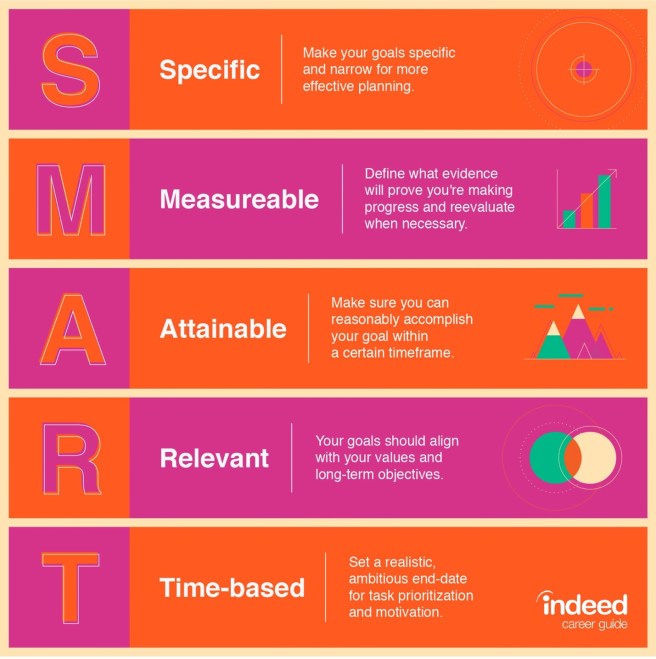
  2. Write SMART goals – specific, measurable, attainable, relevant and time-based. Most people struggle with this, focusing on activities rather than results. Don’t fall into that trap.
  3. Think of your goals as an intention you are setting, both for what you can accomplish and how you can grow.

One question to reflect on is: does my supervisor only know what’s in my written goals, or does she also have insight into how I go about my work?

This is a helpful question because how she, and you, respond to areas of meeting and missing goals will be quite different depending on the “how,” namely:

Whether she says it or not, your boss is unconsciously filtering this performance conversation through this 2×2.

  1. In the areas where you both engaged in the right actions and got the right results—hooray! Everyone wins. Celebrate! And keep it up!
  2. In the areas you engaged in seemingly right actions but did not get results—let’s really get under the hood here, because you’re trying your best, but something didn’t line up. We are teed up to partner!!
  3. If you got results despite not doing the right things—we can both agree that you got lucky, and that’s not the foundation for long term success
  4. And, if you didn’t engage in the right actions and didn’t get the right results—well, this one is obvious.

Assuming that all makes sense, now consider something different.

What if the way you engage with your boss doesn’t allow them to create this 2×2? What if they have little to no visibility into your “how”?

Meaning she knows less than she could about:

  • Your week-to-week priorities
  • Where and how you’re spending your time and getting pulled down rabbit holes
  • Where you’re most productive
  • Where you’re getting stuck
  • What hypotheses of yours were right and wrong

What she’s left with, then, are the results themselves, with little to no information about what led to those results and, therefore, limited ability to really be helpful.

As employees, we often want space and freedom. But to have a productive manager/coach relationship with our boss, we have to give them the information they need to help us diagnose, intervene, and grow…at annual review time and all year round.

Otherwise, the sum total of what they know is: which goals did you hit, which goals you not hit? Check, check, X, X, check.

Without a consistent conversation about “how,” it’s difficult to get underneath goals and into the “why.” And without “why” we cannot learn and grow.

How to Write Good Annual Goals

Nearly every organization has you write out your goals for the year in some form.

And, in nearly every organization I’ve been a part of, doing so has felt like an exercise for someone else.

That’s not how it should be.

So, if you have to write professional goals for 2022, or (even better) if you don’t but you want to write them for you, here’s a better approach.

First, write for you.

Write a first draft in whatever format is most comfortable to you, and write it for you. Make it informal, write it in a notepad, on a blank piece of paper. Do some drawings. Make it creative.

The point is to recognize how constraining it can be to write your Formal Professional Goals for your Boss.

When you do that, you’re already doing a bunch of editing. You’re crafting a story for what you think they want to see rather than writing, in a non-judgmental way, what’s meaningful to you.

So, take a moment to quietly ask yourself:

What would make this year be successful for me?

What set of accomplishments would make me proud?

What new skills would I like to learn / strengthen?

Think of this as a journaling exercise first, so you can honestly explore what would feel like success.

Then, edit this rough draft plan in whatever way you find helpful. See if you can boil it down to a few salient points to summarize your priorities for the year.

Second, write for your supervisor.

Now that you have your own rough draft, open up whatever formal document your company / organization uses and draft your official 2022 goals for the year.

After you have your first draft, review what you’ve written and see if you’ve done a good-enough job of writing SMART goals.

Per this nice graphic from the Indeed website, a SMART goal is one that is Specific, Measurable, Attainable, Relevant, and Time-Based.

The shortcut I use when reading goals is to ask myself, “if it were the end of the year, could I easily and objectively judge whether this goal was achieved?”

For example, you might write a goal along the lines of “improve my analytical skills.” This is a great place to start, but it’s hard to judge what “improved” really means.

Whereas a goal that reads “improve my analytical skills so that fewer than 10% of my projects require re-work of my analysis by” is a much “SMARTer” goal.

Some parting thoughts on accountability.

I believe we should write goals for ourselves so we start out unconstrained. But there’s something more important going on: I find goals to be the most motivating when they are promises I’m making to myself.

In addition, there’s value in stating out loud what you think you can accomplish over the course of a quarter, six months, or a year.

First, by setting an intention I believe we are more likely to make that intention come to pass.

And, the act of goal-setting is also a sort of prediction: a statement of what you believe is possible to do in the next year, both in terms of delivery and in terms of professional development.

When you get to the end of the year and look back at your goals, remember that they were your best guess at what you could and wanted to accomplish in 2022. Use that reflection to calibrate your goal-setting abilities.

Getting better at predicting what we can accomplish is itself an important skill.

And Goals, Or Goals

When we work to develop new skills or habits, we must always ask ourselves: do these skills naturally complement each other, or are they at cross purposes?

For example: I want to exercise more AND sleep more / better.

For most of us, these goals will pull in the same direction. When I exercise regularly, I’m more tired at the end of the day, which leads to me sleeping better (and often more), which means I have more energy the next day and often feel more ready to exercise again.

Versus: I really need more time to relax, so I’m going to watch at least an hour of TV to unwind AND I’m also really tired and need to sleep more / better.

While both late-night TV-watching and sleep both appear to be in the ‘relaxing’ category, personally I find them to cut in opposite directions. I sleep neither more nor better in the rare phases when I’m regularly watching TV at night. (best example: when traveling for work).

Here are a few common AND/OR choices you might face:

Be 100% responsive to email [AND / OR] do deep strategic work.

Focus heavily on external sales / fundraising [AND / OR] clarify our strategic priorities.

Bump up our social media activity [AND / OR] get closer to our customers.

Push hard for this deadline [AND / OR] get closer as a team

Never take a day off [AND / OR] be as productive as possible

Schedule meetings 5 days a week [AND / OR] be in charge of my time

Do outrageous things for our customers [AND / OR] ensure our profitability

Always be efficient [AND / OR] be present for those around me

Promote what we have to offer [AND / OR] promote what our peers have to offer

They say the true mark of intelligence is the ability to hold two seemingly opposing thoughts at the same time.

Perhaps the true mark of someone who is on a growth path is the ability to make seemingly contradictory goals complementary, while also discovering and eliminating the goals that are in true conflict with each other.

Writing Great Annual Goals

It’s the time of year when lots of folks are writing their annual goals. It can feel daunting. Too often this becomes an exercise in list-writing, task after task that we know we must get through.

Somehow, in the process of listing out everything we lose something: the meaning behind it all, the “so what.”

If I boil this exercise down to its essence, my thought experiment is: imagine it is December 31, 2021 and I’m looking back at the year. How will I (and, if these goals are for work, my boss) know how I did?

Here’s how you can bring clarity to the answer to this question.

Take a step back and write two short paragraphs.

  • Paragraph 1: if I’ve done this by the end of the year it will be a good year
  • Paragraph 2: if I’ve done this it will be a great year

Write in simple prose and focus on the stuff that really matters. Not each individual task, but where you will be and how it will feel. Most important, write paragraphs that are specific and clear enough that you, and the colleagues that will be looking at this with you in a year’s time, will be able to judge clearly how you did.

For example, when I think about 2021 for 60 Decibels, we obviously have goals around growth, revenues, profitability and impact. But those numbers alone aren’t my goals for the year. Rather, I’ve written down where I want us to be as a business and as a team, what questions we will have answered for ourselves and in the market, and the strategic milestones we will have hit that set us up for the next success.

What I write down doesn’t feel like a list of accomplishments, it’s more like a description of a location on a map: at this new (future) vantage point, thinks look and feel like this, they smell like this. Here’s who I am, and who we are, thanks to the miles we’ve walked. Here’s what we can now see thanks to how high we’ve climbed.

When I capture my goals for the year in these terms, everything feels more tangible, more visceral, and more motivating. Better yet, it’s easier for our team to understand where we’re headed and why, so we can all get behind that vision.

If it’s a good year, this is where we’ll be.

And if it’s a great year, this is where we’ll be.

Here’s to a great 2021.