Whole30 and the Forever Problem

About 10 days ago, I started the Whole30 diet. Whole30 is a popular elimination diet that purportedly helps with everything from weight loss to chronic inflammation. I’m trying it because I’ve had stomach problems since May that haven’t gone away. I figured that a strict approach to food could help me discover how my diet is, or is not, part of the problem.

The Whole30 plan is strict: 30 days not eating or drinking any dairy, simple carbs (bread, pasta, crackers, rice), added sugar, legumes or alcohol. Plus you try to limit fruit to two servings a day. This boils down to every meal being some version of a protein and a vegetable, and I’m also eating a lot of tree nuts (no peanuts, they are legumes). Breakfast is particularly tough, since my staples of cereal or oatmeal or yogurt plus coffee with milk and sugar are all forbidden. In addition to everything I’m cutting out, it’s also a ton of food prep since everything prepared by someone else has either sugar or bread or butter in it.

While it’s not easy, it does seem to be helping me some. Plus, it’s an interesting experiment in resetting my body’s expectations around sugar, which is my biggest dietary vice.

Here’s what this looks like in practice: last week, I had back-to-back breakfast meetings. At Maison Kaiser, which has the most incredible baguettes and breads I’ve found outside of France, I had a half an avocado, a serving of bacon, and a cup of herbal tea. Then, at my next meeting in an open cafeteria, where I’d normally have gotten a Danish and a fruit salad, I had, instead, a cup of plain herbal tea. Fun.

At the cafeteria, my cup of tea steaming in front of me, I noticed the donut that the person I was meeting with was eating. I had a visceral subconscious reaction: unbelievable that someone would have a sugar donut at breakfast at 9:15 am!!

And then I checked myself, because six days ago I’d have had the exact same thing.

What struck me was how something that was brand new to me–this crazy diet–already felt permanent, enough that my subconscious mind was judging someone who was happily having a doughnut and a coffee just like I would have had a week ago.

This is what I’d call The Forever Problem, the feeling that whatever is happening to us right at this moment is real, true, and permanent.

With respect to adhering to Whole30, my Forever Problem does help me at times: with strict dietary rules, I enter every place where there’s food, from my pantry to a restaurant, differently. I skip past 95% of the available food, say “that’s not what I eat,” and move on.

But more often than not it hurts me.

When I’m hungry on this diet, or craving something, it feels like I will feel this way forever.

When I’m going through a particularly tough patch at work…you guessed it, forever.

Same thing for the last mile of a run…will this pain ever stop? Of course it will, but it doesn’t feel that way.

The Forever Problem often stands in the way of changes we want to make in our lives. Nearly all worthwhile change starts with discomfort, and we mistake temporary hardship—a jolt of fear, a sense of clumsiness when we try a new approach, a bit of shame when the new thing doesn’t quite work—for something permanent. We over-ascribe meaning to these missteps, thinking they represent something other than “this moment, right now, which is fleeting,” and we ultimately give up.

This is why success at making positive, lasting change in our lives is self-reinforcing: we’ve lived through this kind of difficult before, we are familiar with it. While we may not like it, we allow ourselves to consider that it won’t last forever.

This is also why cohorts can be so powerful in supporting the change we seek to make: our fellow travelers remind us of our purpose, they experience the ups and downs differently, they have seen us persist before, and, when our commitment flags, they believe in us more than we believe in ourselves.

None of this is easy, but meaningful change never is. We can get better at pushing through the hard bits by learning to reframe them. Our job is to see them as real but temporary, to remain curious about the panic we’re feeling, and to explore what other responses are available to us. Or, if we really must panic, we can give into that but choose to keep staying the course.

As for me, it’s about time to think about my next meal: which combination of eggs, nuts, roasted vegetables and protein will it contain?

Only 20 days to go. It feels like forever.
Bonus: Your Fantasy Fiction Picks

Tuesday’s post about fun fantasy fiction got an amazing response. I guess we all need an escape every now and then.

So many of you shared your favorite books with me that I wanted to pay it forward and compile your full list. Many of these are new to me, so I thought they might be new to you too. I included the sci-fi ones too, for fun, and some of your comments as well.

Thank you to everyone who shared!

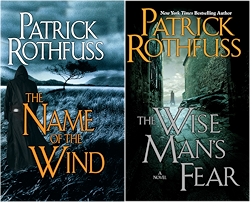
The Kingkiller Chronicle Series (2 books) by  Patrick Rothfuss

The Kingkiller Chronicles by Patrick Rothfuss was recommended by multiple readers so it makes the top of the list.

Red Rising series by Pierce Brown.

Mistborn: The Final Empire by [Sanderson, Brandon]

The Mistborn series by Bryan Sanderson.

The Robot Series by Isaac Asimov, “A 1950s conceptualization of artificial intelligence.”


The Paradox Trilogy by Rachel Bach, “think Alien meets Mills & Boon.” (and, for you non-Brits, Mills & Boon = Harlequin)

Outlander series by Diana Gabaldon, eight books in all.

Fablehaven books by Brandon Mull

The Discworld series by Sir Terry Pratchett has sold more than 80 million copies worldwide.

The Lost City of the Monkey God by Douglas Preston was described by a reader as, “It’s a true story, but wild enough to be fantasy.”

The Bees by Laline Paull, “A beautiful fantasy book about a worker bee and her struggle inside a hive.”

Other recommended authors: Rick Riordan, Anne McCaffrey, C.J. Cherryh, Fritz Leiber, Patricia Wrede, Tamora Pierce, and Robert Heinlein.

Here’s to a holiday season with lots of curling up under a big blanket to escape, for a little while, to another world.

My Daily Book Escape

My end-of-day ritual is to read in bed, usually for 30 to 60 minutes until I am falling asleep. This has become one of the best parts of my day, a quiet sanctuary: the door is closed, our phones and computers are downstairs, my kids are (or should be) asleep, and I can escape into whatever book I’m reading.

While I have always enjoyed a mix of heavier and lighter reading, ever since January 2017, when politics became terrifying and I got sucked into a social media vortex, I’ve discovered a new love for lighter, escapist fantasy fiction. Visiting another world every night has been a cushion from the day and a welcome escape from the noise of our new, cacophonous reality.

With that in mind, here are a few fantasy fiction gems that I’ve enjoyed over the last couple of years, in case you’re looking for something fun to pick up over the holidays.

Harry Potter, by JK Rowling. Right after the 2017 election I grabbed my worn copy of Harry Potter and the Sorcerer’s Stone and reread all seven books for (at least) the tenth time. I love them every time. If you’re one of the eleven people left on earth who hasn’t read them, you’re missing out. (Bonus: if you’re a true fan and you find yourself in London, head over to Greek Street where you’ll find a gem of a store called the House of Mina Lima with beautiful graphic art from the movies – graphic designers Miraphora Mina and Eduardo Lima created many of the props for the movies).

House of Mina LimaMe having a little fun with my Hogwarts letters arriving at House of Mina Lima.

The Winternight Trilogy, by Katherine Alden. I’ve just finished the first two books in this series. My wife discovered them in our favorite bookstore in Great Barrington, theBookloft, and they are wonderful. The writing is much better and more mature than most fantasy, as Alden brings a historian’s eye to the story. Set in 15thcentury Russia, the books, ostensibly about a girl discovering her magical powers, are really about the intersection of modern Christianity with ancient spirits, and set to the backdrop of politics and power in pre-Tsar Russia. I can’t wait until the third book comes out.

The All Souls Trilogy, by Deborah Harkness. I’m not terribly proud of having read these. They are trashy-but-fun vampire/witch stories with a dollop of Fifty Shades of Grey. Still, they were just good enough to finish, and the writing improves after the first book. They’ll be coming out as a TV series soon so you may as well read them first.

The Stormlight Archive, by Byran Sanderson.  Sanderson is an absurdly prolific author, and this series is just one of many he’s written. These books were a guilty pleasure. The Stormlight world is big, sprawling and messy, there warring kingdoms, species pitted against each other, powerful gods, and epic battles. The story at time gets unwieldy and heavy-handed, but I did enjoy them. I’ve been told that Steelheart is the next Sanderson series for me to read.

The Song of Ice and Fire (a.k.a. Game of Thrones) by George R.R. Martin. Not original, I know, but if you’ve only seen the show it’s still worth picking up the books. In reading the first two I thought the series had the potential to stack up with the Lord of the Rings, but the quality dropped a lot after book two and they nearly grind to a halt. The five books are nearly 4,000 pages of reading, so choose wisely.

Seeds of America Trilogy, by Laurie Halse Anderson. These books aren’t strictly fantasy fiction, but they are so good I had to include them. These young adult stories of the American Revolutionary War, told from the perspective of a young female slave, bring historical events down to human scale while leaving the reader to struggle with the inherent contradictions of the fight for American freedom while condoning slavery. The books are fabulous, the characters rich and alive, and I wanted them to go on forever. These books and the Deborah Harkness ones are my favorite ones on this list (besides Harry Potter, of course).

I’d love to hear your additions to this list…otherwise I’ll have to go back to reading serious stuff, and who wants that?

How to give and get better advice

The problem with most advice is that it’s delivered as “here’s what I think you should do.”

Yet it typically reflects, “here’s what I did in a similar situation.”

That old situation and this new one are never the same: different time, different place, different people.

Plus, upon receiving that kind of advice, we end up stuck again: we’ve turned to someone we trust who has more experience with this type of thing than we have. Hearing their advice, we face a new dilemma: is their wisdom, experience and fresh perspective more valid than what we (closer to the texture and nuance of the situation) see and know?

There’s a better way to approach this conversation, both as advice-seeker and the advice-giver.

If we are asked to give advice, we start by advising less.

Instead, we take a position of inquiry. Our job is to tease out what is going on beneath the surface, the questions that are being balanced, the decision that’s lurking but afraid to show its face. As this picture starts to emerge, we can, gently, begin to engage with what’s been offered up. We can re-frame the options that have been presented and share some new ones. We can question the weight being given to this or that risk (or opportunity). We can inquire about some strongly-held assumptions to see if the could be held more loosely, revealing both their truths and their limitations.

Ultimately, through this engagement, the person who felt stuck doesn’t get a take-it-or-leave-it answer, instead she ends up armed with new criteria, a few better assumptions, and a bit more confidence in her own choice-making ability. So equipped, she’s ready to get herself unstuck and find the path she will choose to walk.

Similarly, as the person seeking advice, we can remind ourselves that a much better opening question than “what do you think I should do?” is “can I talk this through with you?  I’d love your input on whether I’m thinking about this in the right way.”